


Hat Patch University
Best Patch Material for Hats: A Buyer's Selection Guide

For most hat orders, UV printed patches deliver the best balance of durability, detail, and low bulk, which is why we default to them for the majority of custom projects. If your design leans on fine gradients or photo-realistic art, sublimated or printed materials will outperform thread. If you need weatherproof toughness for tactical or outdoor gear, PVC/rubber wins. If you want a premium, retail-ready look, laser engraved leatherette is your answer. And if fine detail on a low-profile or performance hat matters more than texture, woven or sublimated patches beat embroidery every time.
Quick picks by priority:
- Best overall/versatile: UV printed patches (thin, vibrant, budget-friendly)
- Best for durability/weather resistance: PVC or rubber
- Best for premium appearance: Laser engraved leatherette
- Best for fine detail/gradients: Sublimated or woven
- Best for low bulk on structured or low-profile hats: UV printed or woven
- Best for classic texture: Embroidered twill
Key Takeaways
The best patch material for most hats is UV printed for its balance of detail, low bulk, and durability, though PVC, leatherette, and woven each win for specific use cases.
| Point | Details |
|---|---|
| Default to UV printed | Choose UV printed patches first for full color, low bulk, and fast production. |
| Match material to hat construction | Save heavy materials like PVC and acrylic for structured or foam-front hats. |
| Pick attachment by material | Sew leather and acrylic; heat-seal twill; use adhesive for printed or leatherette patches. |
| Sample before full runs | Order a physical sample and wear-test it to catch bulk or fit issues early. |
| Hat Patch Supply fits small and large orders | Hat Patch Supply offers no minimum orders, adhesive-backed UV printing, and fast lead times for custom patches. |
Table of Contents
- What Are the Best Patch Materials for Hats?
- Which Patch Material Performs Best for Each Hat Style?
- How Do You Choose the Right Patch Material for Your Hat Order?
- Sew-On, Heat-Seal, or Adhesive: Which Attachment Method Fits?
- How Should You Care for a Hat Patch Over Time?
- What Mistakes Should You Avoid When Choosing a Hat Patch?
- Matching Patch Materials to Hat Construction: What Actually Works
- A Hat Maker’s Take on Patch Material Tradeoffs
- Where to Buy Custom Hat Patches That Actually Hold Up
- Frequently Asked Questions
- Sources
What Are the Best Patch Materials for Hats?
Every patch material on the market solves a different problem, and understanding what each one actually is will save you from an expensive reorder. Here’s what you’re choosing between.
Embroidered (twill) patches start with a tightly woven fabric base, usually twill, stitched over with thread in a raised, textured pattern. Twill’s tight weave gives embroidery machines a stable surface to stitch into, which supports clean lines and strong color retention. The result feels classic and tactile, the kind of patch you’d expect on a varsity jacket or a heritage trucker hat. Best for: logos with bold shapes, block lettering, and brands that want a traditional, dimensional look.
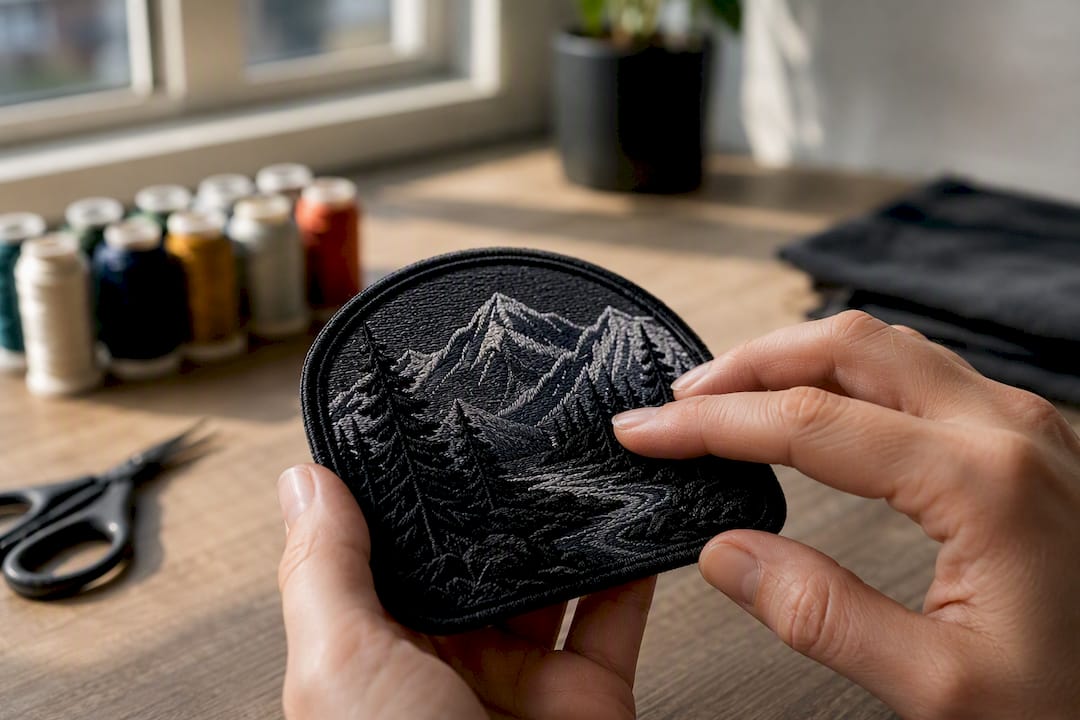
Woven patches also use thread, but a finer, tighter weave than embroidery allows for thinner thread and sharper small text. Where embroidery struggles with tiny fonts or fine outlines, woven patches hold up. Best for: detailed logos with small text on low-profile hats where bulk is a concern.
PVC and rubber patches are molded rather than stitched. Liquid PVC gets poured into a mold matching your artwork, then cured into a flexible, raised design. These patches are essentially weatherproof and hold their shape and color in nearly any weather condition. Best for: outdoor brands, tactical gear, and any hat that’s going to see rain, mud, or heavy handling.
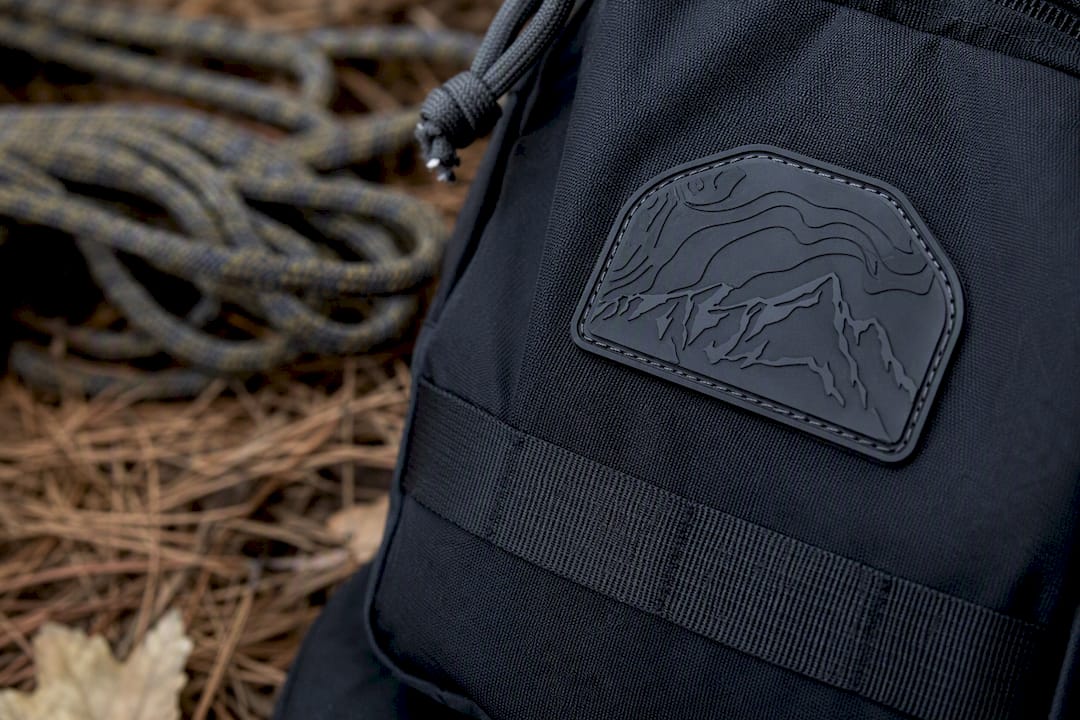
Leather and leatherette (laser engraved) patches get their detail burned in rather than stitched or printed. A laser etches your design directly into leather or a synthetic leatherette, creating a debossed, tonal look that reads as premium the moment someone touches it. Best for: western wear, outdoor lifestyle brands, and any hat where the buyer expects a higher price point.
Printed and sublimated (UV) patches are where full-color, photographic detail lives. UV printing and dye-sublimation apply ink directly to a fabric or polymer surface, which means you’re not limited by thread colors or stitch density. This is the only method that reliably reproduces gradients, photographs, and unlimited color palettes without a big jump in cost. Best for: full-color logos, fishing and outdoor graphics, mascots, anything with a gradient or fine detail that thread simply can’t render.
Felt and chenille patches use a non-woven, pressed fiber base. Felt resists fraying because it has no woven grain to unravel, and it pairs naturally with chenille’s thick, looped yarn construction for that varsity-letterman texture. Best for: retro and collegiate-style designs, simple shapes, and lower-cost decorative patches.
Acrylic and tri-layer patches stack multiple colored layers of acrylic to create a raised, 3D effect without the flexibility tradeoffs of PVC. They read as bold and dimensional on foam-front trucker hats especially. Best for: brands that want a chunky, eye-catching logo that pops off the hat.
Which Patch Material Performs Best for Each Hat Style?
Once you know what each material is, the real question becomes how it behaves on your specific hat, under your specific conditions. Durability, detail, bulk, and price don’t move together. A material that wins on detail often loses on washability, and the toughest options aren’t always the thinnest ones.
| Material | Best For | Durability/Weather | Detail Fidelity | Washability | Thickness/Bulk | Visual Effect | Price/Lead Time | Attachment Compatibility |
|---|---|---|---|---|---|---|---|---|
| Embroidered (twill) | Classic logos, block text | Good, strong stitching | Moderate, poor for fine text | Machine washable, air dry | Medium to high | Raised, textured | Moderate price, moderate lead time | Sew-on, heat-seal |
| Woven | Detailed logos, small text | Good | High for fine lines and text | Machine washable | Low to medium | Flat, crisp | Moderate price, moderate lead time | Sew-on, heat-seal |
| PVC/rubber | Outdoor, tactical, rugged use | Excellent, weatherproof | Moderate, bold shapes only | Wipe clean, hand wash | Medium to high | 3D, molded, glossy | Higher price, longer lead time | Sew-on, hook-and-loop |
| Leather/leatherette | Premium, western, lifestyle | Good, weather-resistant | High engraved detail | Spot clean only | Low | Tonal, debossed, matte | Moderate to higher price, moderate lead time | Sew-on, adhesive |
| Printed/UV/sublimated | Full-color, photo detail, outdoor graphics | Very good, UV-cured coating | Excellent, unlimited color | Machine washable | Very low | Vibrant, flat, photographic | Lower to moderate price, fast lead time | Adhesive, sew-on, heat-seal |
| Felt/chenille | Retro, collegiate, decorative | Fair, wears with heavy use | Low, bold shapes only | Hand wash recommended | Medium to high | Soft, plush texture | Lower price, fast lead time | Sew-on |
| Acrylic/tri-layer | Bold 3D branding, trucker hats | Good | Moderate | Wipe clean, hand wash | High | Dimensional, layered | Higher price, moderate lead time | Sew-on |
Match the material to the hat’s construction, not just the design:
- Structured trucker hats (foam front, mesh back): PVC, acrylic tri-layer, and embroidered twill all work well because the foam panel supports heavier patches without collapsing.
- Foam front caps: Acrylic and PVC shine here since the rigid front panel can carry the extra weight and thickness of a raised patch.
- Low-profile caps: Stick to woven or UV printed patches. Thick embroidery or acrylic will look bulky and can distort the unstructured crown.
- Performance/synthetic hats: UV printed and sublimated patches pair naturally with polyester’s moisture resistance, since both shed water and dry fast. Avoid leather here, as stretch-fit synthetic fabric won’t support a stiff, unbending material.
- Canvas and work caps: Embroidered twill and canvas-backed patches hold up to rugged, everyday wear and heavy embroidery without tearing the base fabric.
Pro Tip: Don’t assume thread always beats print on durability. A UV printed patch on a polyester performance hat often outlasts an embroidered patch in the same spot, because the printed surface resists the fraying and thread-pulling that happens when synthetic fabric flexes constantly during wear.
How Do You Choose the Right Patch Material for Your Hat Order?
Picking a material in isolation is how buyers end up reordering. Work through the hat first, then the design, then the budget.
- Define the hat style and construction. Structured, foam-front, low-profile, stretch-fit, and canvas hats each carry different weight and flexibility, which immediately rules some materials out.
- Set your use case and exposure expectations. A hat that lives outdoors in rain and sun needs different materials than one sold in a retail display or worn a few times a year.
- Prioritize detail, durability, or price. You can usually get two of the three at your target cost. Decide which one matters least before you start comparing quotes.
- Test compatibility with backing and attachment. Confirm the patch material works with the backing you actually plan to use, whether that’s adhesive, sew-on, or hook-and-loop.
- Request a sample or small production run. A physical sample catches color, texture, and fit issues that a digital proof never will.
When you’re talking to a manufacturer or supplier, ask directly:
- What file format do you need for the artwork, and what resolution?
- Is there a minimum order quantity, or can you run small batches?
- What’s the realistic production lead time for this material and quantity?
- What backing options are available, and which one do you recommend for my hat type?
- What border or edge type fits my design best?
Watch for these mismatch warning signs before you commit to a full run:
- A thick acrylic or PVC patch specced for a soft, unstructured, low-profile hat.
- Adhesive-only backing on a hat that customers will wash regularly.
- A stiff leather patch planned for a stretch-fit or performance cap that needs to flex.
Sew-On, Heat-Seal, or Adhesive: Which Attachment Method Fits?
The material determines what your design can look like. The attachment method determines whether it survives being worn. Four main options cover almost every hat project.
Sew-on is the most secure method for curved surfaces and heavier materials. It’s the standard for leather, leatherette, and thick acrylic patches, since stitching handles weight and repeated flexing better than any adhesive.
Heat-seal (iron-on) works well for twill-based embroidered patches and many printed patches, using heat-activated backing that bonds under pressure. It’s fast and doesn’t require sewing equipment, but it performs best on natural or blended fabrics rather than fully synthetic ones.
Permanent adhesive backing is the go-to for UV printed and leatherette patches, especially when the buyer wants a peel-and-stick application with no sewing machine involved. It’s fastest for low-cost or short-term use, though it’s not the first choice for hats that will see frequent washing.
Hook-and-loop (Velcro) offers removability, letting the wearer swap patches, which suits tactical hats and modular merchandise lines. Reinforcing Velcro with a stitched border adds security if the hat will see rough handling.
- Use heavy-duty needles and waxed thread for leather or thick patches on curved crowns; it prevents needle breakage and holds up better against moisture.
- Pre-stabilize stretchy or thin hat fabric with a backing patch before stitching to avoid puckering.
- For high-volume or premium orders, professional application is worth the added cost since it protects both the patch and the hat from stitching errors.
Pro Tip: If you’re unsure which attachment method fits your patch, ask your supplier which backing they recommend for your specific hat fabric. The right pairing here often prevents more returns than the material choice itself.
How Should You Care for a Hat Patch Over Time?
Patch longevity depends as much on care as on the material you picked. Set the right expectations up front and you’ll cut down on complaints later.
- Embroidered and woven patches: Machine wash cold, air dry. Skip the dryer’s heat, which can loosen stitching over time.
- PVC, rubber, and leatherette: Spot clean or hand wash only; avoid the dryer entirely, since heat can warp molded or engraved surfaces.
- Printed/UV patches: Machine washable in most cases, but extended direct sunlight can fade even UV-cured inks over years of outdoor wear.
- Felt and chenille: Hand wash and lay flat to dry to protect the pile texture.
For repairs, re-stitch loose edges as soon as you notice fraying rather than waiting for the patch to detach completely. Trim frayed threads cleanly and reseal printed or leatherette edges if they start lifting. Store finished hats away from prolonged direct sunlight to protect color on printed materials, and consider waxed-thread stitching on outdoor leather patches for extra moisture resistance.
What Mistakes Should You Avoid When Choosing a Hat Patch?
The most common error is mismatching patch bulk to the crown profile: a thick acrylic or embroidered patch on a soft, unstructured hat looks lumpy and wears unevenly. A close second is using iron-on backing on fully synthetic performance hats without testing first, since some polyester blends don’t bond well under heat. Third, buyers sometimes choose dense thread embroidery for a photographic logo that really needed sublimation or UV printing to render properly.
If a patch already looks off, run through this troubleshooting checklist: adhesion loss usually means the wrong backing for the fabric, puckering points to insufficient pre-stabilization, edge fraying often traces back to a merrowed border on a high-friction hat, and color fade typically comes from UV exposure exceeding what that ink type can handle.
Pro Tip: Always request a physical sample before committing to a full production run, and wear a few samples in real conditions for a week. Photos and digital mockups miss texture and fit issues that show up the moment a patch flexes on your head.
Matching Patch Materials to Hat Construction: What Actually Works
Structured, foam-front hats can carry heavier materials, since the rigid front panel supports the extra weight of acrylic or PVC without sagging. Unstructured and stretch-fit hats need the opposite: thin, flexible materials that move with the fabric instead of fighting it.
A few matchups we see work consistently, such as the compatibility of thin, tonal patches with beanies and knit caps, which you can explore in the Tdm collection:
- UV printed thin patches on performance polyester hats. Low bulk, full color, and no risk of the patch cracking when the hat flexes.
- Laser engraved leatherette on pigment-dyed cotton caps. The tonal, debossed look complements cotton’s natural texture and reads as premium.
- Acrylic tri-layer on foam-front trucker hats. The rigid front panel supports the raised, dimensional look without distorting the crown.
Production details matter here too. Merrowed edges give embroidered and woven patches a classic framed look, while heat-cut or laser-cut edges support intricate shapes on printed and engraved patches without fraying. Backing compatibility, lead time, and minimum order quantities often narrow your material choice before design even enters the conversation.
Pro Tip: When in doubt, match heavier materials to structured crowns and lighter, thinner materials to anything stretch-fit or foam-free. This one rule prevents most of the fit complaints we see on reorders.
A Hat Maker’s Take on Patch Material Tradeoffs
Every buyer wants the boldest, most textured patch on the table, and every hat has a limit for how much weight and stiffness it can carry before it stops fitting right. The tradeoff between appearance and long-term wear shows up constantly, and it rarely gets solved by picking the “best” material in the abstract.
Here’s the practical takeaway: if you’re unsure whether a material will hold up on your hat, pay for a small sample run before committing to your full order. It costs less than reprinting a hundred hats that don’t sit right.
Where to Buy Custom Hat Patches That Actually Hold Up
Once you know which material fits your hat, the supplier you choose determines whether the finished product matches what you pictured. Before ordering, check whether a supplier offers the specific product types you need (UV printed, laser engraved leatherette, embroidered, or acrylic), what backing and border options come standard, whether they’ll send a physical sample before a full run, their realistic production lead time, and whether they enforce a minimum order.
Hat Patch Supply built its process around the two things buyers ask for most: no minimum order requirements and fast turnaround, so a single custom hat or a run of five hundred gets treated the same way. Every UV printed patch ships with adhesive backing standard, which means you can test-fit it on a sample hat before committing to sew-on or heat-seal application. The broader promotional products market has seen steady, modest growth in recent years, and that stability shows up in supplier capacity and material availability for smaller custom orders.
If your project needs vibrant, full-color detail without added bulk, the thin red line UV printed hat patch shows what a low-profile printed patch can do on a performance cap. For foam-front truckers where you want a bold, dimensional look instead, the tri-layer acrylic patches are built for exactly that silhouette. Start by uploading your artwork to the full-color UV printed hat patches page and requesting a sample before your next production run.
Frequently Asked Questions
What is the most durable patch material for hats worn outdoors? PVC and rubber patches hold up best in rain, sun, and rough handling since they’re molded rather than stitched and resist damage regardless of weather. UV printed patches also perform well outdoors thanks to their UV-cured ink coating.
How do I attach a patch to a hat without sewing? Heat-seal backing works for many embroidered and printed patches with an iron or heat press, while adhesive-backed patches simply peel and stick. Adhesive is fastest but sew-on remains more secure for hats that see frequent washing or heavy wear.
Can I wash a hat with a patch on it? Most embroidered, woven, and UV printed patches are machine washable in cold water with air drying. Leather, leatherette, and PVC patches should be spot cleaned or hand washed instead, since heat and agitation can warp or crack these surfaces.
What’s the best patch material for a low-profile or unstructured hat? Woven or UV printed patches work best because they’re thin and flexible enough to move with the fabric without adding bulk or distorting the crown. Heavier materials like acrylic or thick embroidery tend to look lumpy on unstructured hats.
How long does custom patch production usually take? Lead times vary by material and complexity, with printed and UV patches typically moving faster than embroidered or laser engraved options due to simpler production steps. Requesting a sample first adds a small amount of time but usually prevents costly reorders.
Sources
- Ppai
Recommended
- Hat Patch Making Made Simple: 7 Powerful Tips to Create Custom Hats That Stand Out - Hat Patch Supply by Hat Foundry
- Custom Tri-Layer Acrylic Patches Wholesale - Premium Quality – Hat Patch Supply
- Thin Red Line UV Printed Hat Patch - Quality and Durability – Hat Patch Supply
- UV Printed Hat Patches: The Complete Guide for Custom Hat Makers - Hat Patch Supply by Hat Foundry
Ready to press your own?
Custom UV patches with no minimum, shipped in 72 hours — or grab a free-shipping sample pack first.