


Hat Patch University
Retail Hat Branding with Patches: A Small-Business Playbook

Patches are one of the most cost-effective ways to brand retail hats, and the single best first step is to pick your patch material and request a sample proof before committing to any production run. Hat Patch Supply offers no-minimum ordering on custom UV printed patches and laser-engraved leatherette patches, which means you can test a design on a single hat before scaling to a full retail SKU. That combination of low entry risk and professional-grade output is what makes retail hat branding with patches practical for small businesses right now.
Three immediate actions to take:
- Decide your retail price tier (casual, premium, or heritage) so your patch material choice matches your margin target.
- Choose a patch type based on that price tier: UV printed for full-color flexibility, leatherette for premium positioning.
- Request a digital mockup and physical sample before placing any production order.
Pro Tip: Adhesive-backed UV printed patches let you test multiple designs on hat blanks without sewing, which is the fastest way to validate a design before committing to a full run.
Key Takeaways
Retail hat branding with patches works best when you match the patch material to your retail price tier, request a proof before production, and use no-minimum ordering to test designs before scaling.
| Point | Details |
|---|---|
| Match material to price tier | UV printed suits $25–38 casual lines; leatherette suits $45–65 premium positioning. |
| Proof before production | Always request a digital mockup and physical sample before approving any production run. |
| Simplify your artwork | Bold shapes and single-color wordmarks outperform fine detail on patches at 2–3 inches. |
| Use no-minimum ordering to test | Start with one design and one hat blank to validate before committing to bulk inventory. |
| Hatpatchsupply as your supplier | Hatpatchsupply offers no-minimum UV printed and leatherette patches with fast turnaround and digital proofs. |
Table of Contents
- What decisions should you make before designing or ordering patches?
- Which patch types work best for retail hat branding?
- How are patches applied, and which method lasts the longest?
- What file formats and design rules produce the best patch results?
- What drives patch pricing, and how do lead times work?
- How should you price and merchandise patched hats for retail?
- How do you choose the right patch supplier?
- Three retail hat concepts you can order this week
- What we actually see from hat makers, and the mistakes worth avoiding
- Hatpatchsupply makes no-minimum patch ordering straightforward
- Sources
What decisions should you make before designing or ordering patches?
Good retail hat branding starts with planning decisions, not artwork. Locking in the following before you open a design file saves you from expensive reprints and mismatched inventory.
- Target retail price band: Your price tier determines which patch material is defensible. A lower-priced trucker hat supports a UV printed patch; a higher-priced heritage cap supports laser-engraved leatherette.
- Customer profile: Age, lifestyle, and purchase context shape everything from hat blank choice to patch finish. A workwear buyer expects durability; a lifestyle buyer responds to aesthetics.
- Hat blank selection: Structured truckers, unstructured dad hats, and beanies each have different front-panel sizes and curvatures that affect patch dimensions and placement.
- Patch placement: Center front is the default, but a side-tab or back-panel patch creates a secondary SKU without a new design.
- SKU strategy: Decide whether you’re launching one signature patch design or a small family of options. Starting with one design and one blank reduces complexity and inventory risk.
Pro Tip: If you’re testing multiple designs, no-minimum ordering with adhesive-backed patches lets you apply different patches to the same hat blank and photograph them before committing to a sewn production run.
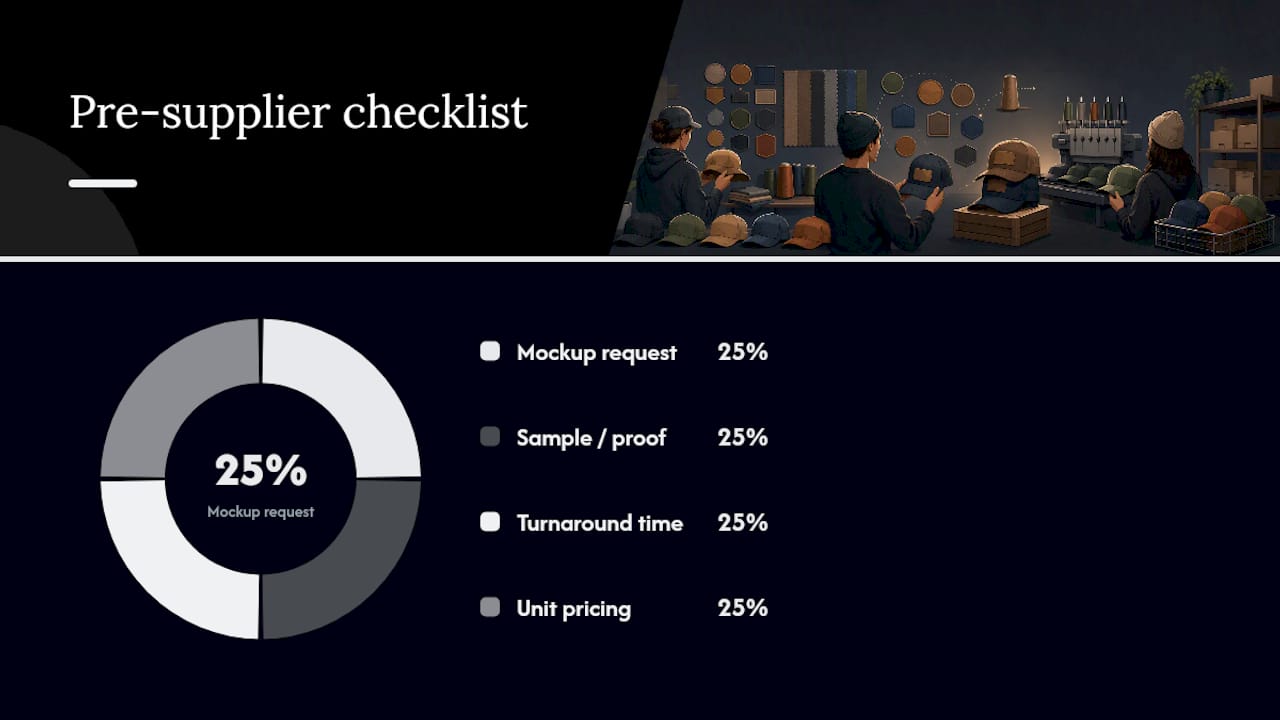
Before contacting any supplier, prepare these four items: a digital mockup request, a physical sample or proof request, a confirmed turnaround time, and unit pricing at both test quantity and scale quantity.
Which patch types work best for retail hat branding?
Patch material is the single biggest driver of perceived value, retail price, and production cost. Here’s how the main options compare.
Custom UV printed patches reproduce gradients, photographs, and multi-color artwork that embroidery simply cannot replicate at small run sizes. Embroidered patches carry a tactile quality that reads as craftsmanship; woven patches handle small text and fine gradients better than raised embroidery. PVC patches are the right call for outdoor and workwear lines where moisture and abrasion are real concerns. Laser-engraved leatherette patches deliver a high-resolution, premium aesthetic that ages with the hat, making them the strongest choice for heritage positioning and higher price bands. Acrylic and tri-layer patches add a dimensional, modern look suited to fashion retail and gift-oriented lines.
Pro Tip: Choose laser-engraved leatherette when your retail price is $45 or above and your brand story centers on craft or heritage. Choose UV printed when you need full-color flexibility, fast turnaround, or a seasonal design that may change each quarter.
How are patches applied, and which method lasts the longest?
Application method determines both production workflow and long-term durability. Each approach has a clear use case.
- Sew-on: The most permanent method. A straight or zigzag stitch around the patch perimeter locks it to the hat fabric. Use this for any hat that will be washed regularly, including workwear and outdoor caps.
- Adhesive-backed: A pressure-sensitive or thermally activated adhesive layer bonds the patch to the hat without tools. Best for sampling, display hats, and test runs where you need to swap designs quickly.
- Heat-seal (iron-on): A thermally activated polymer backing bonds under heat and pressure. Faster than sewing for production, though high-heat washing can weaken the bond over time.
- Hook-and-loop (Velcro-style): Allows the wearer to swap patches. Useful for limited-edition programs or customizable retail concepts where the hat blank is sold separately from the patch.
For retail hats that customers will wear and wash, sewing is the most reliable finish. If you’re using adhesive-backed patches for sampling, always request a sewn-on version for the final production run to confirm the patch sits flat and the edges hold.
- Wash in cold water, gentle cycle, with the hat turned inside out when possible.
- Avoid high-heat dryers; air drying preserves both the patch adhesive and the hat blank’s shape.
- For embroidered patches, check that the backing fabric is stabilized to prevent puckering after washing.
- Include care instructions on your product hang tag or packaging.
Pro Tip: Adhesive-backed patches change your return and exchange decisions. A customer who receives a hat with an adhesive patch can reposition it, which reduces complaints about placement. Always request a sewn-on sample alongside your adhesive test run so you can compare how each sits on the panel.
What file formats and design rules produce the best patch results?
Artwork quality is where most first-time patch orders fail. Supplying the right files upfront prevents proof delays and production errors.
File checklist:
- Vector file in AI, EPS, SVG, or PDF format with all fonts outlined.
- For UV printed patches only: 300–600 DPI raster files are acceptable as a supplement, but vector is still preferred.
- Color mode: CMYK for printed patches; confirm spot color requirements with your supplier for embroidered or PVC patches.
- Include a simplified one-color lockup version of your logo. If your design survives a single-color stamp, it will translate cleanly to any patch method.
Sizing guidance: Most hat front panels accommodate patches of moderate width. Keep critical design elements away from the patch edge to account for stitching or die-cut bleed. Fine serif strokes, tight gradients, and small interior text below 6pt tend to blur or disappear on deboss and laser processes. As Griwolfe’s leather patch design guide documents, leather and leatherette patches work best with bold, simple shapes and single-color wordmarks; fine interior detail fails under typical laser processes.
Request from your supplier before approving production:
- Digital mockup placed on your specific hat blank.
- Stitch count estimate for embroidered patches (affects cost and texture).
- Laser preview for leatherette patches showing how fine lines will render.
Pro Tip: Always supply a simplified one-color version of your logo alongside your full-color artwork. This version reveals whether your mark has enough visual weight to read at 2–3 inches, which is the real test for any hat patch.
What drives patch pricing, and how do lead times work?
Unit cost depends on patch material, design complexity, color count, patch size, application method, and order quantity, with rush or expedited production adding extra cost.
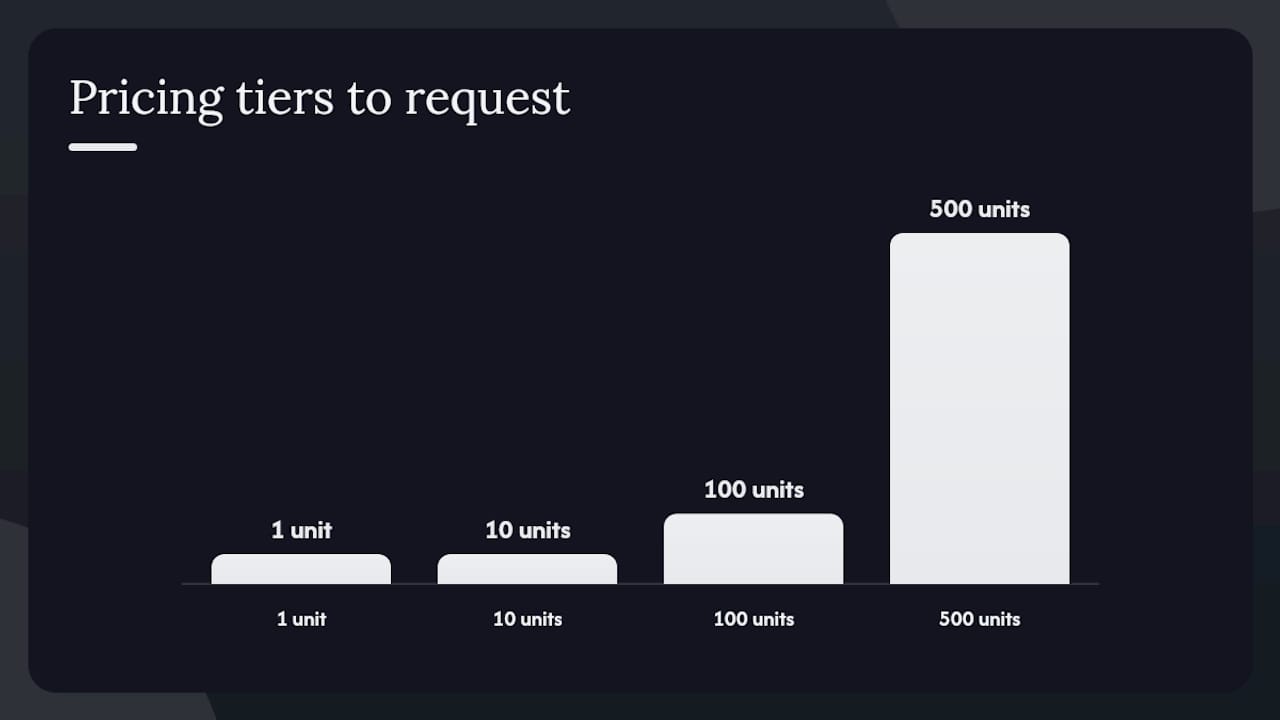
- Unit price tiers: Confirm pricing at 1, 10, 100, and 500 units. The gap between single-unit and 100-unit pricing is often significant, which is why no-minimum options matter for testing.
- Sample and proof policy: Ask whether digital proofs are included, whether physical samples carry a fee, and whether that fee applies toward your production order.
- Shipping terms: Confirm whether quoted prices include shipping or whether freight is added at checkout.
- Re-order pricing: Ask whether your approved artwork is stored and whether re-order pricing is locked at the original rate.
No-minimum ordering, as offered by Hatpatchsupply, lets you validate a design at single-unit cost before committing to a larger run. That workflow, proof first, then a small test batch, then a production order, is the lowest-risk path to a retail-ready SKU. Bulk discount behavior typically becomes meaningful beyond a moderate order size, so plan your first reorder trigger accordingly.
How should you price and merchandise patched hats for retail?
Pricing patched hats follows a straightforward logic: the patch material signals the price tier, and the merchandising confirms it.
- $25–35 (casual): UV printed patch on a structured trucker or dad hat. Hero shot showing the full hat, close-up of the patch detail, and a lifestyle image.
- $35–55 (premium): Embroidered or leatherette patch on an unstructured dad hat or mid-profile cap. Include a hang tag that names the patch material and care instructions.
- $55+ (heritage/limited): Laser-engraved leatherette or top-grain leather patch on a premium blank. Branded card insert, sewn-in interior tag, and copy that tells the story of the patch technique.
For online listings, the close-up patch detail shot is the most important image. Customers buying a patched hat are buying the patch as much as the hat. SKU naming conventions matter too: use a consistent format like [Brand]-[PatchType]-[Color]-[BlankStyle] so reorders and inventory tracking stay clean as your line grows. For retail display inspiration, Brass & Bunker Co’s hat collection shows how finished patched hats can be presented at the retail level.
Pro Tip: A branded card insert that explains the patch material (“hand-engraved leatherette, ages with wear”) adds perceived value without adding significant cost. It also gives customers a reason to share the product on social media.
How do you choose the right patch supplier?
Supplier selection comes down to five questions. Ask all of them before placing an order.
- Does the supplier offer no-minimum ordering for samples and test runs?
- What is the confirmed turnaround time from approved proof to shipped product?
- Is a digital mockup on your hat blank included, and is a physical sample available?
- Is re-order pricing documented and locked after your first production run?
- Can the supplier provide examples of finished retail products similar to your target?
Trust signals to require before committing: no minimum order requirements, documented fast production times, a clear sample proof policy, transparent unit pricing at multiple quantities, and evidence of customer satisfaction. When you submit a sample request, include your hat blank (or its specifications), your vector artwork file, and your target quantity range. That information lets a supplier give you an accurate quote and a realistic timeline on the first exchange.
Pro Tip: Ask for tiered pricing in writing during your first inquiry. Suppliers who provide clear per-unit costs at 1, 10, 100, and 500 units are the ones who will also give you accurate re-order quotes later.
For a real-world example of how embroidered patches look on finished retail hats, the Brass & Bunker Co embroidered patch product illustrates the kind of clean, retail-ready presentation worth benchmarking.
Three retail hat concepts you can order this week
These three concepts are designed to be copied directly. Each pairs a patch type with a hat blank and a retail positioning note.
- Concept 1: Minimalist brand mark on laser-engraved leatherette. A bold wordmark or simple icon on a 2.5" oval leatherette patch, sewn to the center front of an unstructured dad hat. Target retail: $45–65. Best for lifestyle, coffee, or craft brands. Merchandising tip: photograph on a neutral surface with the patch detail filling the frame.
- Concept 2: Full-color seasonal graphic on a UV printed patch. A photographic or illustrated design on a 3" rectangular UV printed patch, adhesive-backed for easy application to a structured trucker. Target retail: $28–38. Best for seasonal drops, events, or collaborations. Merchandising tip: show the hat flat-lay with the patch art repeated as a background element.
- Concept 3: PVC or embroidered patch for outdoor durability. A high-contrast logo on a 2.75" PVC or embroidered patch, sewn to a mid-profile structured cap. Target retail: $35–50. Best for outdoor, workwear, or athletic brands. Merchandising tip: shoot on location in the relevant environment.
What we actually see from hat makers, and the mistakes worth avoiding
The most common request we receive is straightforward: a small business wants their logo on a hat and needs it to look professional without ordering 500 units. That’s exactly the use case no-minimum patch ordering was built for. The most avoidable error, though, is submitting artwork that’s too detailed for the chosen patch method. A logo with fine gradients and tight serif text will look sharp on a screen and muddy on a 2.5" leatherette patch. Simplify the mark before you submit it, and always request a laser preview or printed proof before approving production. The second most common mistake is choosing the wrong hat blank for the patch size. A patch that looks proportional on a structured high-profile cap can overwhelm a low-profile dad hat. Order the blank first, measure the front panel, then size your patch to fit.
Hatpatchsupply makes no-minimum patch ordering straightforward
Small hat businesses don’t need to commit to large runs to get professional results. Hatpatchsupply offers no-minimum ordering on custom UV printed patches and wholesale laser-engraved leatherette patches, with fast production times and digital mockups included. You can test a single design, confirm it works on your hat blank, and scale from there without holding excess inventory.
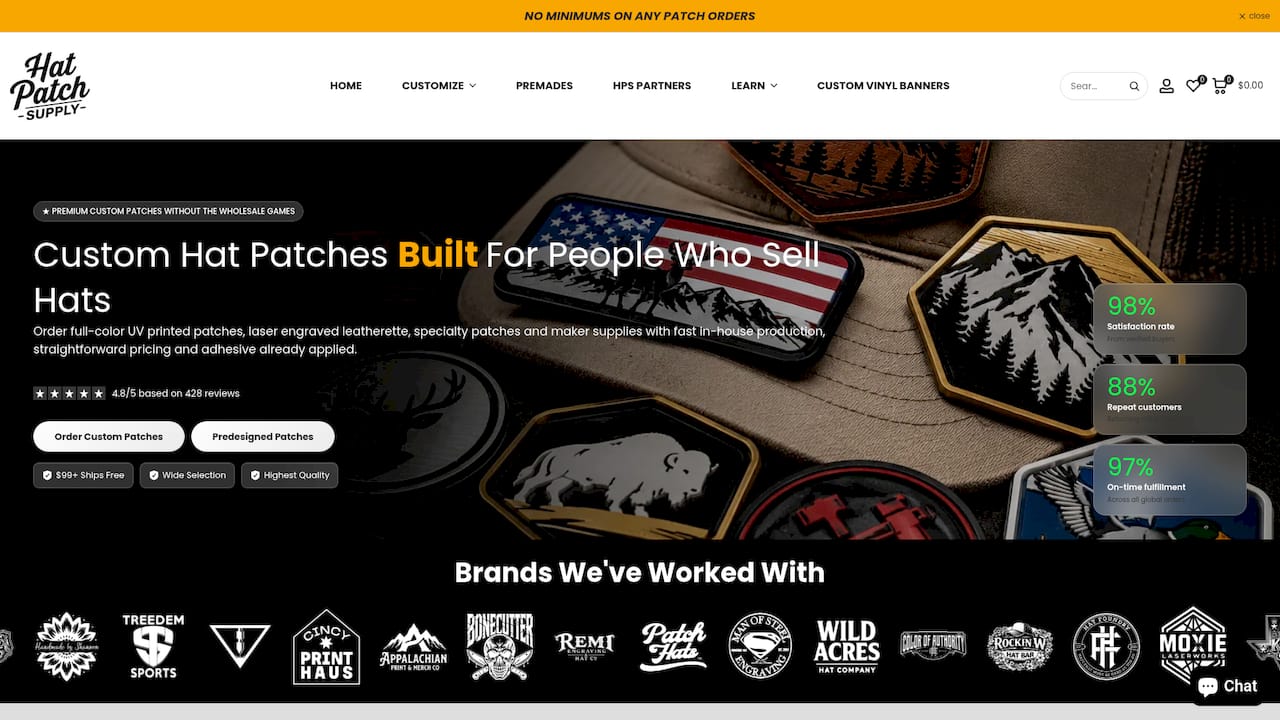
For a ready-made example of what a finished UV printed patch looks like at retail quality, the Brotherhood UV printed patch shows the level of color and detail you can expect. To start, submit your vector artwork and hat blank specs, and request a digital proof. The Adobe Illustrator mockup tool lets you visualize patch placement before production begins.
Sources
These links cover ordering, design tools, and retail inspiration for your hat patch program.
- Leather Patch Hat Ideas: 15 Designs Worth Ordering – Griwolfe
Recommended next step: Request a sample kit from Hatpatchsupply with your vector artwork and hat blank specs. One proof is all it takes to confirm your design is retail-ready.
Recommended
- How to Start a Hat Bar: Equipment, Patches, and What Actually Sells – Hat Patch Supply
- Hat Patch University | Custom Hat Business Tips, Guides & Tutorials – Hat Patch Supply
- Hat Patch Supply - The Brand Behind Thousands Of Patches
- UV Printed vs. Laser Engraved vs. Embroidered Hat Patches: Which Shoul – Hat Patch Supply
Ready to press your own?
Custom UV patches with no minimum, shipped in 72 hours — or grab a free-shipping sample pack first.